


Cet essai paru en 2012 parle de la détection laparoscopique des ganglions sentinelles dans le cancer localisé de la prostate, et des résultats obtenus sur 70 patients, avec la sonde Gamma-Sup.
T. Rousseau, J. Lacoste, A. Pallardy, L. Campion, B. Bridji, A. Mouaden, A. Testard, G. Aillet, G. Le Coguic, E. Potiron, C. Curtet, F. Kraeber-Bodéré, C. Rousseau.
Progrès en Urologie,
Volume 22, Issue 1,
2012,
Pages 30-37,
ISSN 1166-7087,
https://doi.org/10.1016/j.purol.2011.05.006.
(https://www.sciencedirect.com/science/article/pii/S1166708711001680)
Abstarct : Résumé
Objectifs
L’atteinte ganglionnaire métastatique est un facteur pronostique important dans le cancer de la prostate (PC). Le but de cette étude prospective était d’évaluer la pertinence de la technique du ganglion sentinelle par voie laparoscopique dans la stadification locorégionale chez les patients avec PC cliniquement localisé.
Patients et méthodes
Une injection par voie transrectale échoguidée de 0,3 mL/100 MBq de 99mTc-sulfure de rhénium colloïdal dans chaque lobe prostatique a été réalisée la veille de l’intervention. La radiodétection peropératoire était réalisée avec une sonde laparoscopique (Clerad® Gamma Sup) suivie d’un curage extensif. Les comptages des GS étaient réalisés in vivo et confirmés ex vivo. L’analyse anatomopathologique était réalisée par hématoxyline-phloxine-safran et suivie d’un immunomarquage si GS indemnes.
Technique chirurgicale
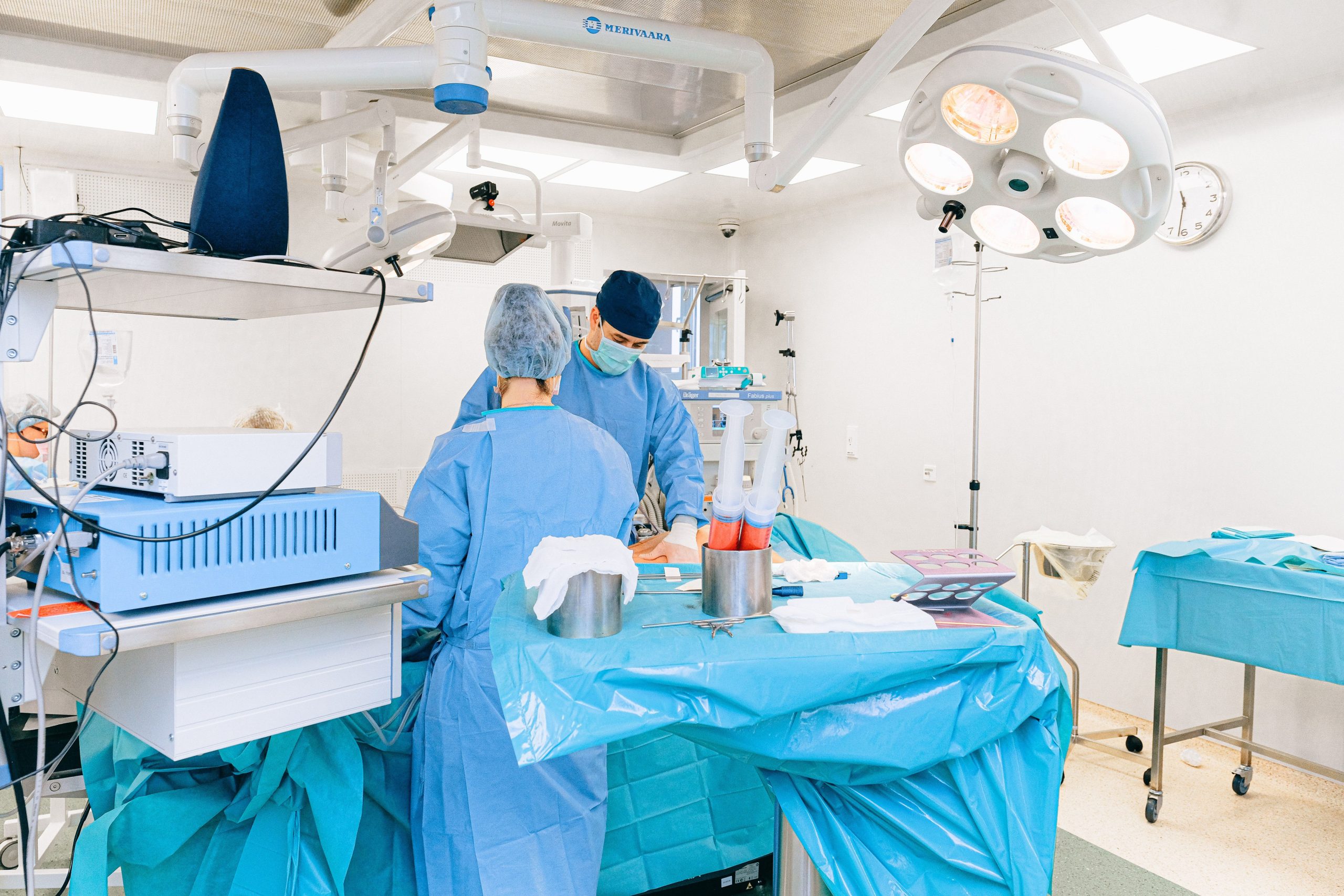
Les patients ont été pris en charge selon la même manière par deux chirurgiens urologues, réalisant par voie laparoscopique la technique du GS associée systématiquement à un curage ganglionnaire pelvien étendu.
Le patient en décubitus dorsal a été placé en position de Tredelenbourg. Quatre trocarts ont été mis en place après insufflation de la cavité abdominale : un trocart de 10 mm ombilical pour l’optique, un trocart de 10 mm à gauche, un autre de 5 mm à droite et un dernier trocart de 12 mm sus-pubien à environ 3 cm au-dessus du pubis pour la mise en place de la sonde de détection.
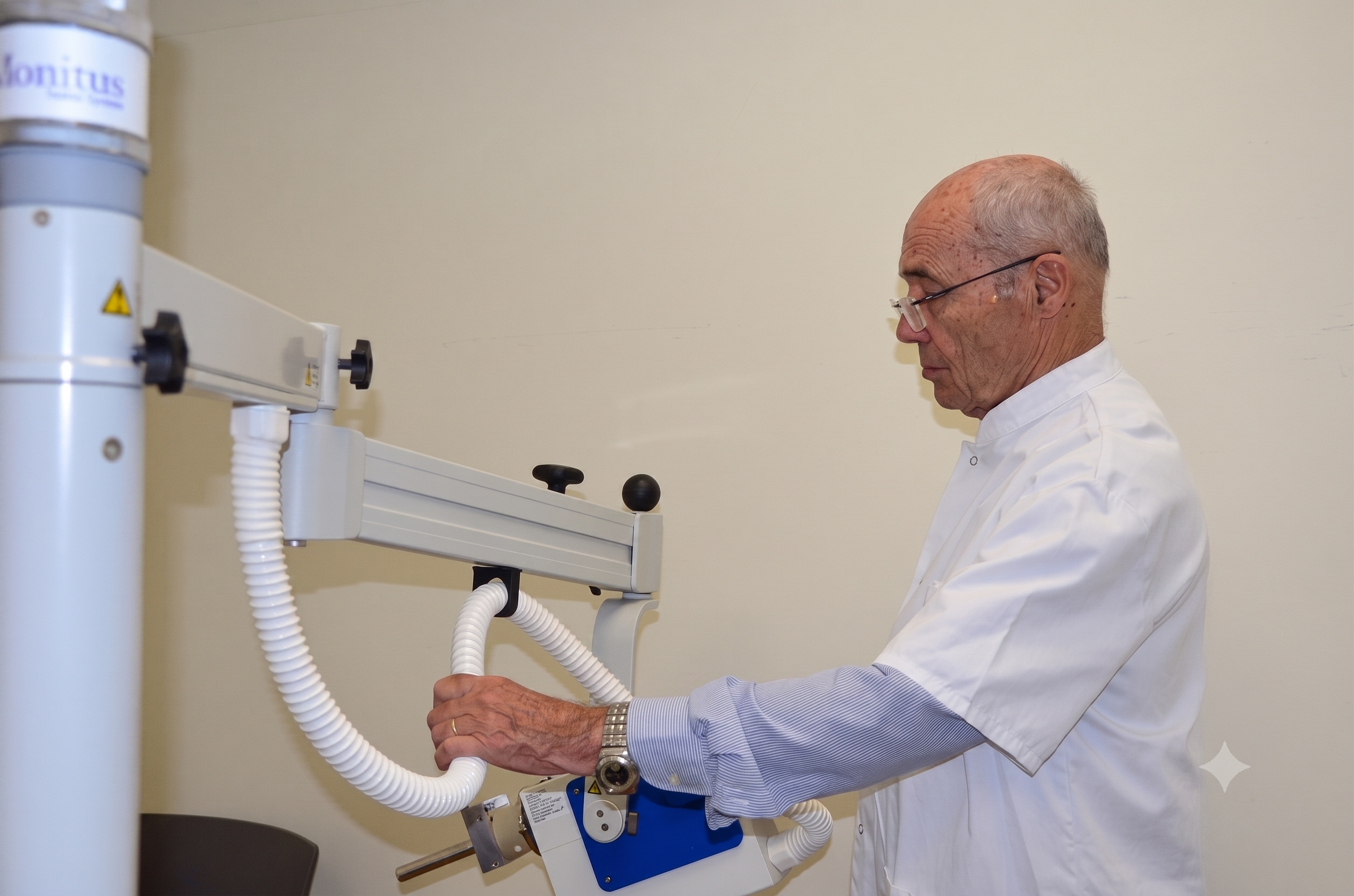
La sonde utilisée était la sonde Gamma Sup cœlioscopique (Clerad®). Il s’agit d’une sonde de 10 mm de diamètre, pouvant être utilisée avec des trocarts de 12 mm, dotée d’un cristal scintillant de type iodure de césium activé au thallium (Fig. 1). Le module électronique affichait la moyenne du comptage sur cinq, dix ou 15 secondes, en coups par secondes (CPS).

Les principaux temps chirurgicaux ont été :
- repérage des lames ganglionnaires, y compris au-delà des uretères (lames iliaques communes), jusqu’à la bifurcation aortique ;
- repérage des bruits de fond, avec relevé systématique de l’activité émise au niveau de plusieurs régions de bruit de fond (dôme vésical, péritoine, psoas, lobes prostatiques droit et gauche) ;
- comptage et repérage des GS au niveau des différentes chaînes ganglionnaires pelviennes, iliaques et éventuellement en pré-sacré/promontoire de manière méthodique en maintenant le détecteur de la sonde au contact des lames ganglionnaires et des GS pendant cinq secondes ;
- comptage in vivo après exérèse afin de vérifier que l’exérèse des GS a été complète ;
- réalisation d’un curage pelvien extensif bilatéral intéressant toutes les chaînes ganglionnaires pelviennes (fosses obturatrices, aires ganglionnaires iliaques externes et iliaques internes, y compris au-delà des uretères au niveau des lames iliaques communes, jusqu’à la bifurcation aortique). Ce curage considéré comme curage de référence a permis de déterminer le taux de FN.
Une prostatectomie radicale a été réalisée ensuite en fonction des cas, lors du même temps opératoire.
Outre le comptage in vivo durant le geste opératoire, un comptage ex vivo sur une table à distance du patient a été réalisé immédiatement après exérèse du/des GS.
Résultats
Soixante-dix patients ayant d’un cancer de la prostate à risque intermédiaire ou élevé de métastases ganglionnaires ont été inclus. Le taux de détection peropératoire était de 68/70 (97,0 %). Quatorze patients avaient des métastases ganglionnaires, six uniquement dans les GS. Le taux de faux-négatifs était de 2/14 (14,0 %). La région iliaque interne était le premier site métastatique (40,9 %). Une atteinte sentinelle métastatique de la région iliaque commune au-delà du croisement urétéral était présente dans 18,2 %. Un curage limité ou standard aurait ignoré respectivement 72,7 % et 59,0 % des métastases ganglionnaires.
Conclusion
La voie laparoscopique était adaptée à un large repérage des GS et un curage ciblé de ces ganglions limitait significativement le risque chirurgical du curage étendu tout en maintenant la précision de l’information.
Mots clés
Cancer de prostate ; Chirurgie laparoscopique ; Ganglion sentinelle ; Curage ganglionnaire pelvien étendu