


This study, published in 2012, investigates laparoscopic sentinel lymph node detection in patients with localized prostate cancer, reporting outcomes in a series of 70 patients, using Gamma-Sup probe.
T. Rousseau, J. Lacoste, A. Pallardy, L. Campion, B. Bridji, A. Mouaden, A. Testard, G. Aillet, G. Le Coguic, E. Potiron, C. Curtet, F. Kraeber-Bodéré, C. Rousseau.
Progrès en Urologie,
Volume 22, Issue 1,
2012,
Pages 30-37,
ISSN 1166-7087,
https://doi.org/10.1016/j.purol.2011.05.006.
(https://www.sciencedirect.com/science/article/pii/S1166708711001680)
Abstarct : Summary
Objectives
The lymph node metastasis is an important prognostic factor in prostatic cancer. The aim of this prospective study was to evaluate the relevance of the sentinel lymph node biopsy by laparoscopy in staging locoregional patients with clinically localized PC.
Patients and methods:
A transrectal ultrasound-guided injection by 0.3 mL/100MBq 99mTc-sulfur rhenium colloid in each prostatic lobe was performed the day before surgery. The detection was realized intraoperatively with a laparoscopic probe (Clerad® Gamma Sup) followed by extensive dissection. Counts of SLN were performed in vivo and confirmed ex vivo. The histological analysis was performed by hematoxyline-phloxine-safran staining and followed by immunochemistry if SLN is free.
Surgical technique
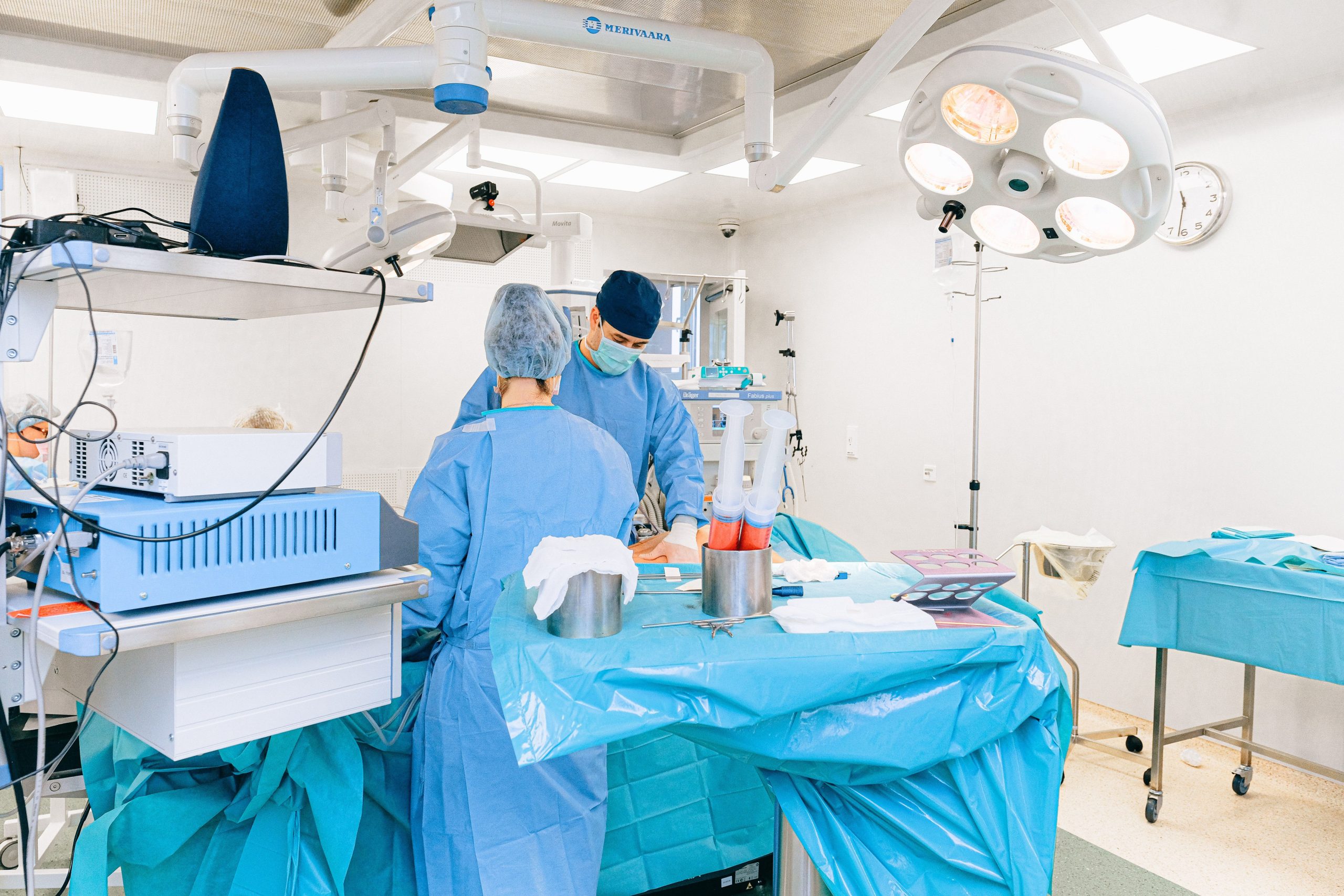
Patients were managed in a standardized manner by two urological surgeons, both performing the laparoscopic sentinel lymph node (SLN) technique systematically combined with extended pelvic lymph node dissection.
The patient was placed in the supine position with a Trendelenburg tilt. Following pneumoperitoneum, four trocars were inserted: a 10‑mm umbilical trocar for the laparoscope, a 10‑mm trocar on the left side, a 5‑mm trocar on the right side, and a 12‑mm suprapubic trocar positioned approximately 3 cm above the pubic symphysis for insertion of the detection probe.
The device used was a laparoscopic Gamma Sup probe (Clerad®). This probe, measuring 10 mm in diameter and compatible with 12‑mm trocars, is equipped with a thallium-activated cesium iodide scintillation crystal (Fig. 1). The electronic module displayed the mean count rate over 5, 10, or 15 seconds, expressed in counts per second (cps).

The main surgical steps were as follows:
- repérage des lames ganglionnaires, y compris au-delà des uretères (lames iliaques communes), jusqu’à la bifurcation aortique ;
- Background count assessment, with systematic recording of radioactivity levels in several background regions (bladder dome, peritoneum, psoas muscle, and right and left prostatic lobes);
- Detection and counting of sentinel lymph nodes (SLNs) within the various pelvic and iliac nodal chains, and when applicable in the presacral/promontory region, performed in a standardized manner by maintaining the probe detector in contact with lymphatic tissues and SLNs for five seconds;
- In vivo counting after excision, to confirm complete removal of SLNs;
- Bilateral extended pelvic lymph node dissection, including all pelvic nodal stations (obturator fossae, external and internal iliac regions, and areas beyond the ureters at the level of the common iliac vessels, up to the aortic bifurcation). This reference dissection enabled determination of the false-negative (FN) rate.
Radical prostatectomy was subsequently performed in selected cases during the same operative session.
In addition to intraoperative in vivo measurements, ex vivo counting was performed immediately after SLN excision on a table positioned away from the patient.
Results:
Seventy patients with carcinoma of the prostate at intermediate or high risk of lymph node metastases were included. The intraoperative detection rate was 68/70 (97%). Fourteen patients had lymph node metastases, six only in SLN. The false negative rate was 2/14 (14%). The internal iliac region was the first metastatic site (40.9%). A metastatic sentinel node in common iliac region beyond the ureteral junction was present in 18.2%. A non-negligible sentinel metastatic region was the common iliac area (18.2%). Limited or standard lymph node dissection would have ignored respectively 72.7% and 59% of lymph node metastases.
Conclusion
La voie laparoscopique était adaptée à un large repérage des GS et un curage ciblé de ces ganglions limitait significativement le risque chirurgical du curage étendu tout en maintenant la précision de l’information.
Key words
Prostate cancer ; Laparoscopic surgery ; Sentinel lymph node ; Extended pelvic lymph node dissection